

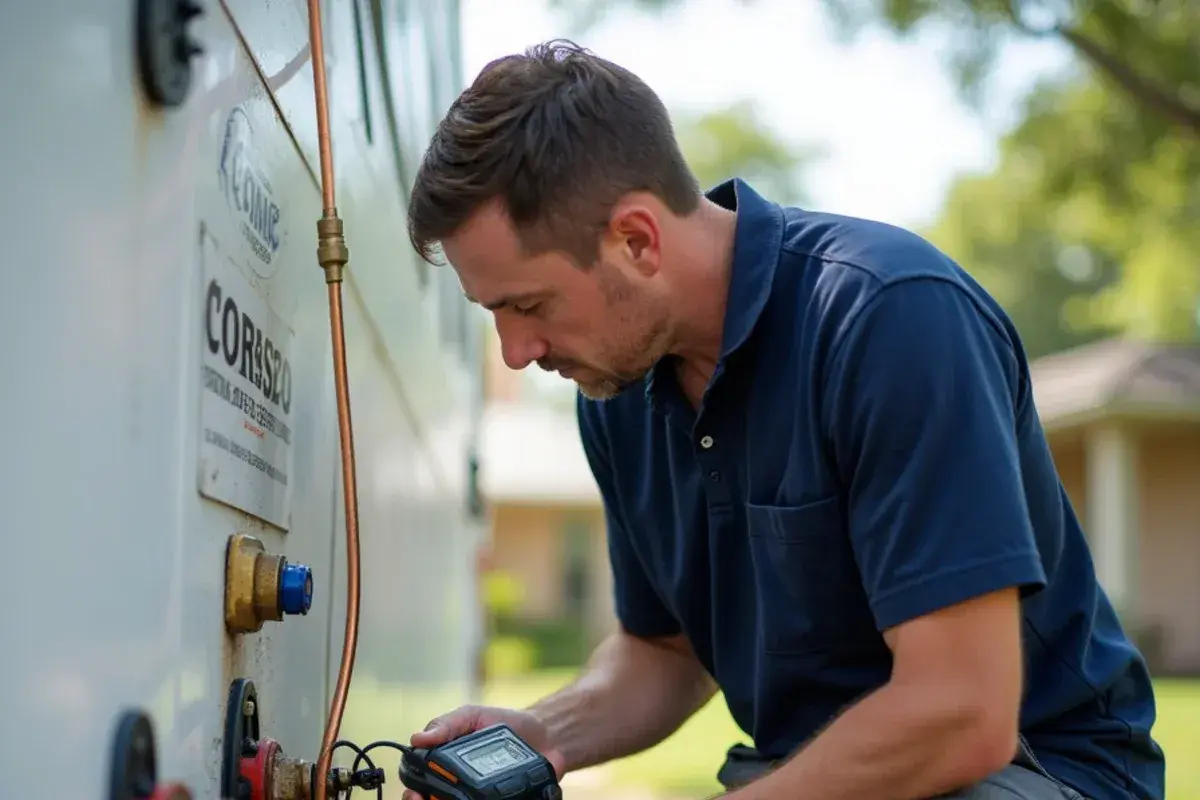
A widespread misconception among homeowners in Killeen, TX is that an air conditioner naturally consumes Freon during routine operation, requiring an annual chemical top-off before summer heat arrives. In reality, your air conditioner operates on a permanently sealed, closed-loop refrigeration system. The chemical refrigerant circulating through your system never evaporates, wears out, or burns away during cooling cycles. It moves continuously between the indoor evaporator coil and the outdoor condenser, changing states from liquid to vapor to transfer heat out of your home.
When an air conditioner loses cooling capacity due to low refrigerant, a physical breach exists in the copper tubing, aluminum coil channels, braze joints, or service valves. Ignoring the leak and continually adding refrigerant without fixing the puncture is an expensive mistake. Operating with an undercharged circuit deprives the compressor of cooling suction gas and circulating lubrication oil, accelerating mechanical friction and leading to compressor motor burnout. At Quality Heating & Air Conditioning, our EPA-certified technicians locate the leak, complete permanent brazed repairs, and restore factory charge levels through our disciplined AC repair services.
What does our comprehensive refrigerant leak repair service include?
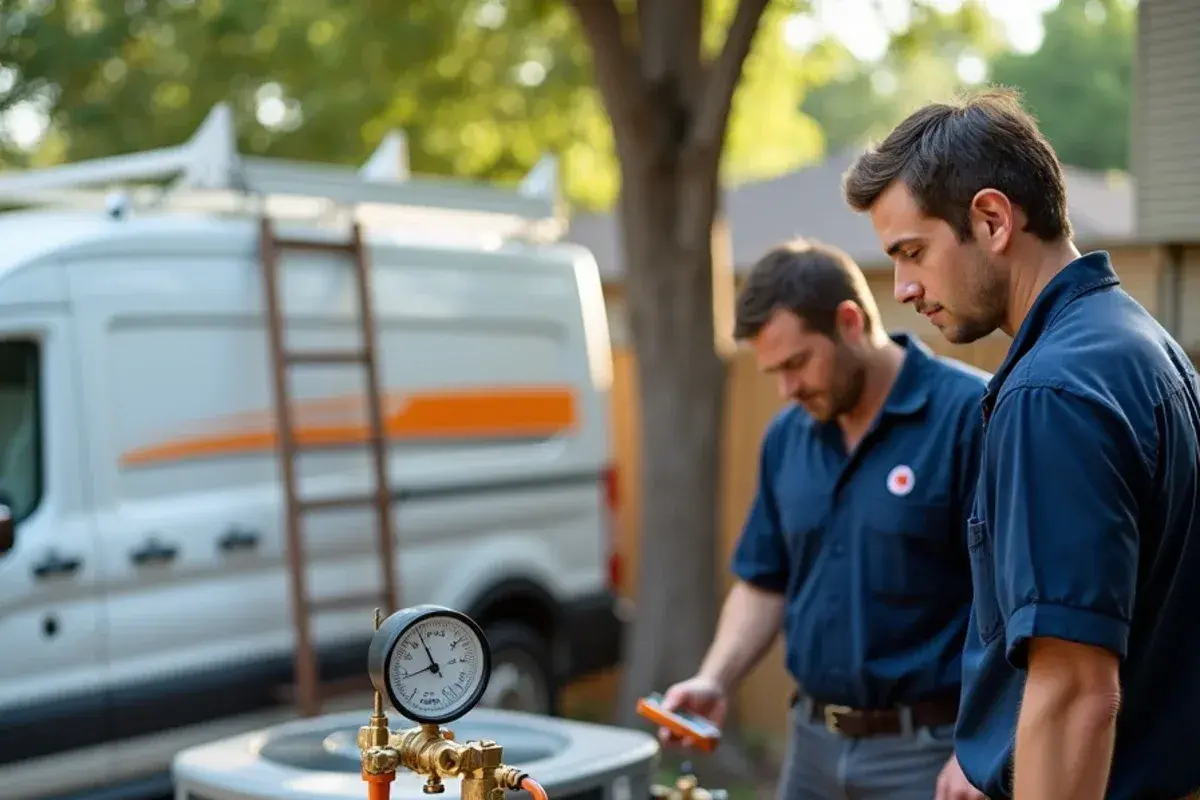
Locating and repairing a chemical refrigerant leak requires specialized diagnostic instruments, mechanical brazing skills, and strict adherence to federal environmental standards. Our technicians perform a comprehensive, step-by-step restoration workflow on every service call:
- Electronic Halogen & Infrared Sniffer Inspection: Sweeping heated-diode and infrared sensing wands along coil u-bends and service valves to pinpoint leaks as small as a fraction of an ounce per year.
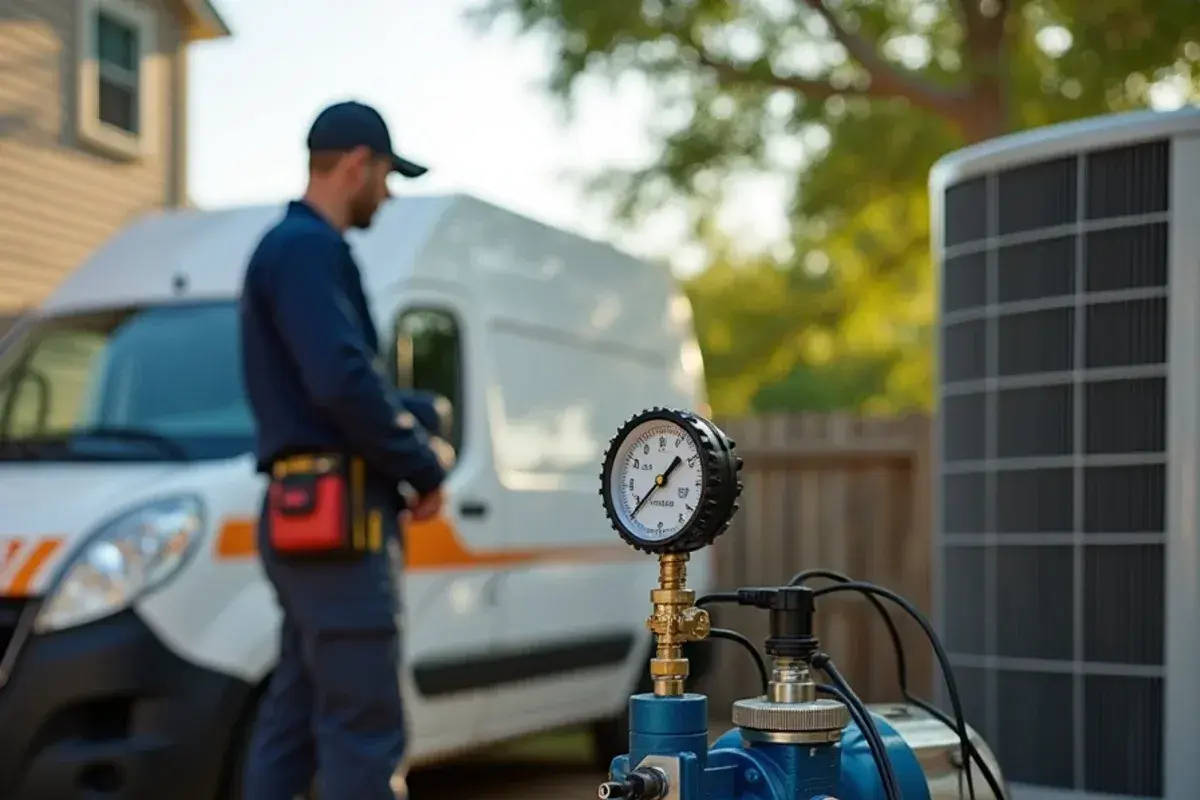
- High-Pressure Dry Nitrogen Pressure Decay Testing: Pressurizing isolated line sets and coils up to 350–400 PSI with dry nitrogen to verify leak tightness on digital manifold gauges.
- Micro-Bubble & Ultraviolet Fluorescent Dye Tracing: Applying chemical bubble solutions to suspected fittings and injecting fluorescent dye to expose hairline fractures under high-output UV light.
- Clean Air Act Compliant Refrigerant Recovery: Safely extracting remaining refrigerant into dedicated, certified recovery cylinders without venting ozone-depleting substances into the atmosphere.
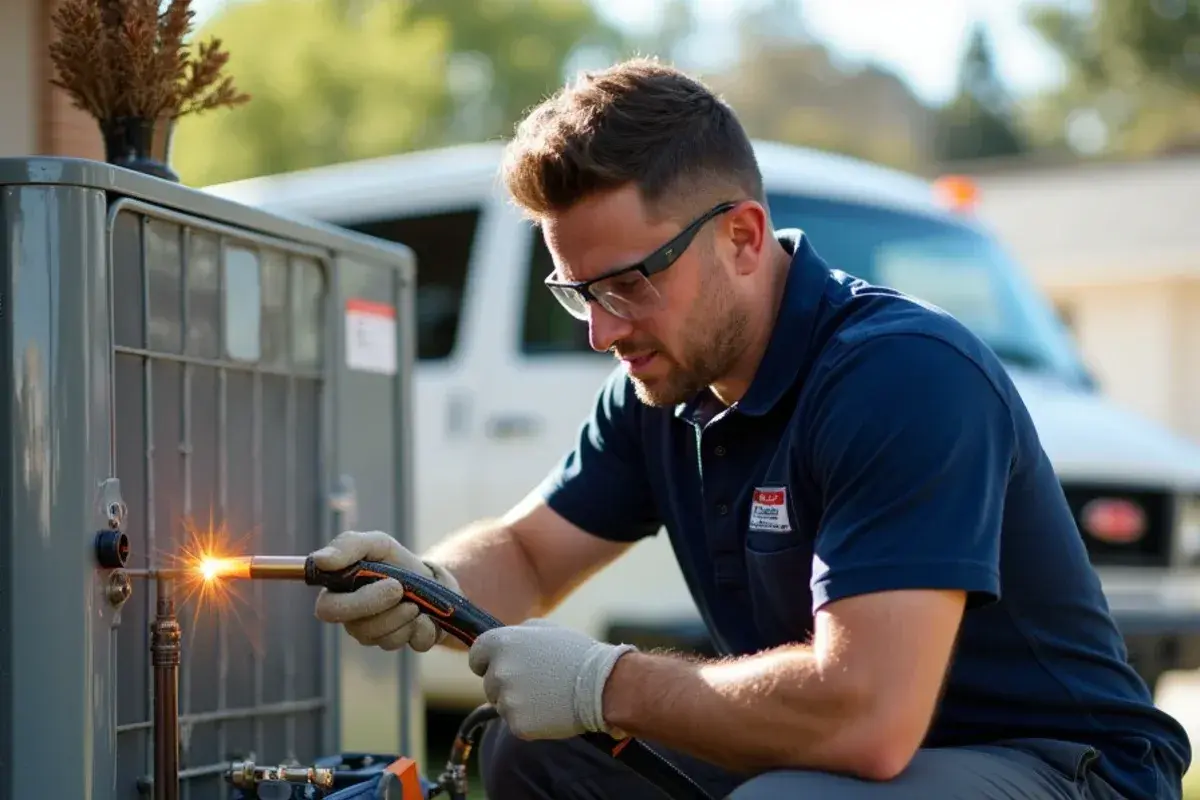
- Nitrogen-Purged High-Silver Brazing: Flowing inert dry nitrogen through copper piping while repairing joints with 15% silver alloy to prevent interior oxidation and copper flake contamination.
- Deep Vacuum Dehydration & Digital Scale Charging: Pulling a two-stage vacuum below 500 microns to remove all internal moisture, followed by charging virgin refrigerant by precise digital weight.
Common warning signs your air conditioner has a refrigerant leak
Detecting refrigerant leaks early protects Killeen homeowners from high utility bills and severe compressor damage. During Central Texas heat waves, low refrigerant symptoms develop gradually before causing total cooling failure:
The earliest indicator is usually a system that runs for hours without satisfying the thermostat setpoint, blowing slightly cool or room-temperature air from the vents. You may also notice ice forming along the indoor evaporator coil or the outdoor suction line, resulting from sub-freezing saturation temperatures that require frozen AC repair. Another giveaway is a faint hissing sound coming from the indoor air handler cabinet or outdoor service valves, indicating high-pressure gas escaping through a metal crack. Finally, because compressor lubrication oil travels with the refrigerant, dark, oily stains on copper joints or the concrete condenser pad often point directly to an active leak.
Why operating an AC with low refrigerant destroys the compressor
Operating an undercharged air conditioning unit creates severe mechanical hazards inside the sealed scroll compressor. The compressor relies on cool, dense suction vapor returning from the indoor evaporator to absorb heat generated by the electric motor windings. When the refrigerant charge drops, returning suction gas becomes thin and superheated, causing compressor operating temperatures to soar past 250°F.
Furthermore, refrigeration oil circulates throughout the system in suspension with the refrigerant. Low refrigerant velocity prevents oil from returning to the compressor sump, trapping lubrication inside the indoor coil. Starved of oil and subjected to intense internal heat, the compressor bearings seize, the scroll spirals score, and the internal motor windings break down chemically, creating acidic sludge that ruins the entire system and necessitates full AC replacement installation.
Microscopic formicary corrosion and coil tubing failures
In modern Central Texas homes, evaporator coil leaks frequently stem from formicary corrosion rather than physical damage. Formicary corrosion occurs when common household vapors—such as cleaning solvents, paints, adhesives, and building off-gasses—react with moisture on the aluminum and copper evaporator fins to form mild organic acids. These acids eat microscopic tunnels through the thin metal walls, producing numerous pinhole breaches.
When formicary corrosion affects an evaporator coil, localized solder repairs rarely provide a permanent fix because additional pinholes inevitably open across neighboring tubes. In these situations, our technicians present transparent evaluations under the 50% rule, explaining why replacing the entire cased coil assembly or upgrading to a modern system is far more cost-effective than repeatedly attempting patch repairs on compromised metal.
Our 6-step leak isolation and hermetic restoration protocol
Our refrigeration specialists employ a rigorous six-stage hermetic leak remediation workflow on every service call:
- System Triage & Pressure Evaluation: We measure suction pressure, head pressure, superheat, and subcooling to confirm that low refrigerant mass is the root cause of cooling loss.
- Multi-Method Leak Pinpointing: We deploy electronic halogen detectors, micro-bubble solution, and ultraviolet dye to find the exact physical leak source.
- EPA-Mandated Refrigerant Recovery: We extract the remaining refrigerant charge into certified recovery tanks using commercial recovery machines, complying fully with EPA Section 608 mandates.
- Nitrogen-Purged Precision Brazing: We repair the copper rupture using high-silver brazing rod while flowing dry nitrogen through the line to keep interior tubing walls mirror-clean.
- High-Pressure Nitrogen Hold & Deep Evacuation: We pressurize the circuit to 350 PSI to prove joint strength, release the nitrogen, and pull a vacuum below 500 microns to boil away internal moisture.
- Factory Scale Recharge & Delta-T Testing: We weigh virgin refrigerant into the system using digital scales and measure operating temperature splits to confirm balanced cooling performance.
What factors determine the cost of AC refrigerant leak repair in Killeen?
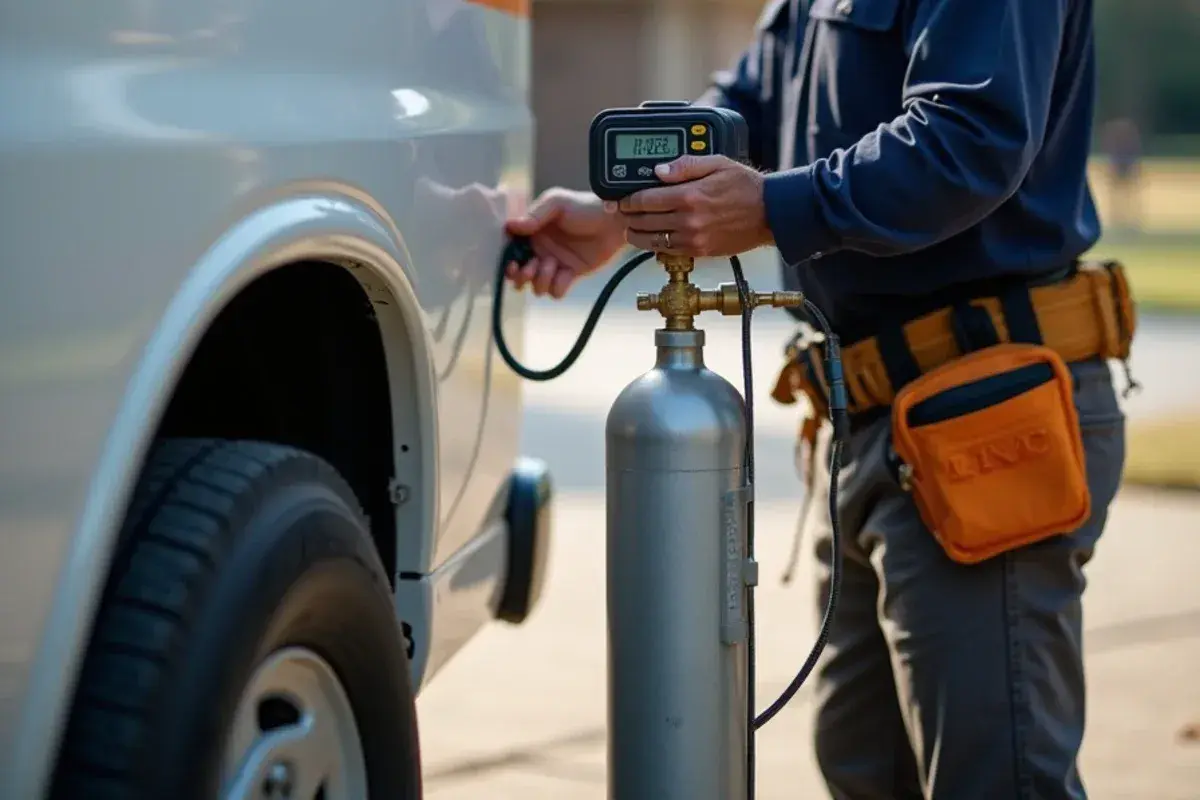
Refrigerant leak repair investments depend on where the leak is located, the type of chemical refrigerant required, and whether structural brazing or coil replacement is necessary:
- Accessible Braze Repairs & Valve Re-Sealing: Repairing a cracked copper joint near outdoor service valves, replacing Schrader cores, or re-flaring a mini-split fitting represents straightforward labor and testing.
- Chemical Refrigerant Type: The cost of virgin refrigerant varies widely. Modern R-410A and newly introduced R-454B are readily available, while phased-out R-22 is strictly limited and substantially more expensive.
- Evaporator Coil Replacement: When multiple corrosion pinholes riddle an indoor coil, replacing the factory cased coil assembly involves higher component costs and manufacturer warranty coordination.
- Diagnostic Credit Policy: Quality Heating & Air Conditioning waives your initial diagnostic evaluation expense by crediting it directly against approved repairs, keeping total costs clear and upfront.
TDLR-licensed mechanical contractors and EPA Universal certification
Handling chemical refrigerants in Texas requires verified licensing, technical training, and environmental certification. Our team holds Class A credentials under Texas Department of Licensing and Regulation License #TACLB23981E, confirming statewide authority for unlimited-tonnage mechanical systems and active commercial insurance. In addition, our service staff maintain Universal EPA Section 608 recovery cards, preventing unlawful chemical venting under Clean Air Act rules.
Originally founded in Killeen during the summer of 1973 by Oliver Kilpatrick, our company has provided Central Texas homeowners with honest service for over 50 years. Led by Jerry Kilpatrick from our 1112 Florence Rd headquarters, we treat every customer like a neighbor, providing lasting repairs and transparent flat rates without sales pressure.
Where we do refrigerant leak repair around Killeen
A few of the communities we serve, and what this service usually looks like there.
- Refrigerant Leak Repair in Temple, TX
Temple property owners dealing with declining cooling capacity rely on our precision electronic leak detection to locate hidden coil leaks.
- Refrigerant Leak Repair in Copperas Cove, TX
Older residences in Copperas Cove trust our experienced technicians to repair copper braze fractures and preserve existing systems.
- Refrigerant Leak Repair in Harker Heights, TX
Harker Heights subdivisions receive thorough nitrogen pressure testing to identify line set vibration leaks in long architectural chases.
- Refrigerant Leak Repair in Belton, TX
Homes near Belton Lake count on our certified technicians for compliant refrigerant recovery, joint brazing, and deep vacuum holds.
- Refrigerant Leak Repair in Fort Cavazos, TX
Off-post military residences near Fort Cavazos benefit from our prompt leak repair services to avoid repeated expensive recharges.
- Refrigerant Leak Repair in Nolanville, TX
Growing residential communities along I-14 depend on our team to resolve factory coil weld leaks and restore peak cooling efficiency.
- Refrigerant Leak Repair in Salado, TX
Custom Salado properties receive meticulous refrigeration leak repairs that protect indoor comfort and prevent compressor motor burnouts.
- Refrigerant Leak Repair in Gatesville, TX
Coryell County acreage homes trust our fully equipped mobile service trucks to braze leaks and recharge systems in a single trip.
- Refrigerant Leak Repair in Kempner, TX
Ranch properties near Highway 190 trust our refrigeration technicians to isolate heat pump reversing valve leaks and flare fitting failures.
Google reviews that mention work like refrigerant leak repair
3.8 out of 5 from 57 Google reviews
“Awesome place! They came out and did an estimate on my a/c that was freezing over. Determined it needed cleaning. I had them come out after an estimate of $350-$400, when I was quoted $500 by a different company not long before. The guys Dale and Max were very nice and professional. They came in pulled the coils and cleaned them. They put everything back and cleaned up. They treated myself and my family with respect and were very nice to our cats as we run a rescue in our home. Max is allergic to cats and never once complained! I will continue to use their company for my heating and air conditioning needs! The final cost was $375 for them to pull and clean my a/c coils. Very affordable!!”
- Fair pricing
- Quality workmanship
- Clean work area
- Affordability
Services: Frozen AC coil cleaning & diagnosis
Response from the owner: Thank you for your kind words. We appreciate your business and look forward to future business with you.
“Good prices, good customer service and I am just so thankful that I contacted them!! They just fixed my air today and the last person said it needed refrigerant, they came and saw it was my backed up drain and they fixed it and I have air!! After weeks of sweating and fighting this heat, they fixed my air!!! I will definitely use them again.”
- Accurate diagnosis
- Honesty over upselling
- Fair price
- Immediate cooling
Services: Condensate drain line clearing & diagnostic
Response from the owner: Thank you for your kind words, we appreciate it. We look forward to serving you in the future.
“The Technicians were extremely professional. They were very knowledgeable of HVAC System and they explained everything in layman terms before beginning work.”
- Professionalism
- Clear explanations
- Thorough diagnosis
Services: HVAC system diagnostic & service
Response from the owner: Thank you for your kind words. We appreciate your business and look forward to future business with you.
Frequently asked questions about AC refrigerant leaks and repairs in Killeen
Why shouldn't refrigerant just be topped off every summer?
An air conditioner is a hermetically sealed closed-loop refrigeration circuit that does not consume or burn off refrigerant during normal operation. If refrigerant is low, a physical hole or fracture exists in the copper tubing, coil tubes, or service valves. Simply adding refrigerant without repairing the leak wastes money, damages the compressor through oil loss, and violates federal Clean Air Act regulations.
Can you still recharge an older R-22 system?
While the EPA phased out virgin R-22 refrigerant production in 2020, reclaimed and recycled R-22 supplies remain legally available for servicing existing equipment. However, because supplies are strictly limited, R-22 is exceptionally expensive. If an older R-22 system develops a major coil leak, replacing the system with a modern R-410A or R-454B unit is typically more economical.
How do you find a refrigerant leak?
Our technicians utilize a multi-tiered leak detection process. We begin with sensitive electronic halogen sniffers capable of detecting leaks as small as 0.1 ounces per year. We also inspect fittings for oil staining, apply micro-bubble solution to suspected joints, and inject ultraviolet fluorescent dye. For stubborn leaks, we isolate sections and pressurize them with dry nitrogen to 350 PSI.
Is a leaking evaporator coil worth repairing?
In most cases involving residential aluminum or copper-fin evaporator coils, microscopic formicary corrosion creates multiple tiny pinholes throughout the coil face. Soldering or brazing one pinhole often results in another leak developing nearby shortly afterward. When an evaporator coil develops multiple internal leaks, replacing the cased coil assembly under warranty is the recommended solution.
How long does a professional refrigerant leak repair take?
A complete refrigerant leak repair typically requires three to five hours. This window allows our technicians to isolate the leak location, recover remaining refrigerant into an EPA-approved cylinder, braze the tubing under nitrogen purge, conduct a high-pressure nitrogen decay test, and pull a vacuum below 500 microns before charging by digital scale.
Still have a question about refrigerant leak repair? Ask us directly.
Call (213) 423-7827